

Type your name. Pick the first day and the time the market opens. It closes 90 minutes later. You can watch after the close. You cannot buy or sell until it opens.
Checking your clock against the market clock.
iPad clock
Checking the date, then rolling the market up to today.
Size medals mark market profit, not money a parent sent. Year return is the market only. Cash-in medals are dividends and lesson pay. Allowance does not count.
From $330.00 when the year opened. Best year kept: +0.0%.
Dividends plus lesson pay. Not a price move. Best year: $0.00.
Coins leave this cash pile and move to the parent account. Shares stay until you sell them. The real dollars are whatever your parent set for each 1,000 coins.
Day 1 of 5 · month 1 · year 1
Now $330.00 · peak $330.00. Spec can double you or send you to $0.
Seven real dates make one market month. The month is counted day 1 through day 7. Coins come from lessons, or from allowance your parent sends. They are not printed on a schedule.
After hours. Prices still move. You can watch. You cannot buy or sell.
No shares yet. Open Markets and buy a company.
No buys or sells yet.
Number of shares, not dollars. The plan buys that many at the ask when the clock hits. If cash cannot cover the ask plus fee, that run is skipped.
No plan yet. Example: 1 share of Prairie Pipe each market month.
After hours. Watching only. Buy and sell wait for the next open.
Tap a number. It explains open, close, the weekly high, and the weekly low.
Tap on each statement number for more information.
From these figures alone, is this a sound long-term holding? A right answer pays 10 KVC.
Drag to spin the globe. Tap a country. See what it produces, what one person produces, and how Canada trades with it.
Before you spend on wants, set aside a piece of every paycheck for savings and investing. Even a small piece. You are training yourself to treat your future as a real bill.
Investing is like watering a young plant. At first you see almost nothing. Keep watering. Roots grow under the soil. Years later the plant is strong. Money that earns returns, which then earn more returns, works the same way. Time is the quiet multiplier.
Checking prices every hour trains anxiety, not wisdom. Research carefully, buy quality, then go live your life. The market will open again tomorrow. Patience is a skill.
People who only think a week ahead often say “it’s only a few dollars.” Over years, those few dollars — saved or wasted — become large. Small leaks sink ships. Small deposits build freedom.
A friend may already have more because a parent or grandparent saved and invested for decades. That is second-generation fruit. If you are the first in your family to build these habits, take pride in that. You are planting trees others will sit under. Comparison steals joy and hides progress.
The strongest investing edge for most people is a good job and growing skills. Every extra dollar of honest income can be saved and invested. Learn to be useful. Charge fairly for your work. Then invest the surplus.
When you have decades ahead, you can take more risk and ride out storms. As responsibilities grow — family, home, health — you usually want more balance and diversification. The plan changes with the season of life.
Money is not evil. Greed is. Money can feed a family, fund a mission, free your time, and help neighbors. The goal is not to win a scoreboard against strangers. The goal is enough security to live with integrity, raise a family well, enjoy the journey, and serve something larger than yourself.
Some people plan only until next weekend. Build a different habit: think in years and decades. Steady income. Steady saving. Steady investing. Living fully along the way. That combination — work, patience, family, and ownership of good companies — has lifted ordinary people for generations in free societies.
Before money, trade is awkward. You have eggs. The person with shoes wants firewood. Nobody meets in the middle. Money is the third thing almost everyone will take, so you can sell eggs today and buy shoes next month without hunting a coincidence.
Money has three jobs. It lets you trade. It lets you count — “this bike is two hundred units,” not “this bike is eleven chickens and a favour.” It lets you store work for later. If the third job fails — if the ticket melts in your pocket — people dump tickets for anything on the shelf. That rush is not greed in the cartoon sense. It is people refusing to hold a leaking bucket.
A thinker named Ludwig von Mises wrote this down in a thick book, The Theory of Money and Credit. His first split is the one kids miss: money is not wealth. The sandwich is wealth. The hours that baked it are wealth. The skill that will bake tomorrow’s sandwich is wealth. Money is the ticket that helps you move between those things without carrying a chicken to the till.
In this app a share of Apple is a slice of a sandwich shop that sells phones. Cash is the ticket. Do not treat a rising ticket pile as the same thing as a better shop. Do not treat a falling ticket pile as the shop vanishing in the night. The shop and the ticket can move differently. That split is the whole course.
Make income — the 100 questions — pays you tickets for knowing this. The ticker can also take the tickets away. Those are different machines.
Nobody sat down on day one of the human story and invented “money” as a school subject. People traded things they already wanted: salt, cattle, copper, silver, gold. Those things were useful or easy to hide and divide. After enough people accepted silver for grain, silver was not just metal. It was money. Yesterday’s habit became today’s price tag.
Mises called the long backward look the regression idea. Kid version: the value of money today leans on the fact that it was already money yesterday, all the way back to when the thing was just useful. There is no clean “year zero” where paper appeared and everyone clapped. Paper claims arrived later, standing in for metal that already had a job.
That history is why a speech cannot create trust from nothing. A government can name a ticket legal tender — you must take it for a debt. People still remember last year’s grocery list. If tickets multiply faster than bread, the memory shows up as higher tags. Law can force the name. It cannot force the basket to stay the same size.
When you look at Enbridge or Royal Bank in the list, you are looking at firms that invoice in that named ticket. They did not invent CAD. They live in it. The chapter is not “hate the ticket.” It is “know it has a past, and the past still leaks into the price of milk.”
Commodity money, or hard money in loose talk, is a good that is also money. Gold and silver are the school examples. You can imagine melting the coin. New supply comes from mines and scrap, not from a meeting. That slowness is the feature people mean when they say “hard.”
Fiat is money because people accept it and the law names it. The Canadian dollar is fiat. It buys groceries. It pays a sergeant. It is also easier to create more of than a gold vein. Both sentences can be true in the same mouth. “Fiat works” is not the same sentence as “fiat cannot leak.”
Mises treated paper that was a claim on gold as a money substitute — a ticket that stands in for the real thing when it is actually backed. When the tickets outnumber the vault, you no longer have a one-for-one claim. You have a different animal that still wears the old name. That is the moment a lot of arguments start, including the ones in Money School chapter 6 about invented credit.
Hard vs fiat is not a team sport for this app. It is a supply story. Ask of any ticket: how does a new unit appear, and who decides? Gold: a mine. CAD: banks and the public sector, in ways Fiat World spells out. Bitcoin: a rule people argue about. The question is allowed to stay uncomfortable.
The twenty in your pocket is the ticket. The number in a chequing app is usually a claim: the bank owes you twenty. Most “money” in a modern country is that claim. That is normal. It is also why a bank run is a story about promises, not about missing coins under a mattress.
A substitute is fine when you can get the thing it stands for, or when everyone treats the claim as good as the thing for daily trade. It is not fine to talk as if every dollar-shaped word is the same object. A share of Walmart is not a substitute for CAD. A deposit is not a gold bar. A card balance is not income.
KidVest splits chequing, savings, and portfolio cash on purpose when Life is in play. Even if we park lifestyle later, keep the idea: bill-tickets, buffer-tickets, and owner-slices. Mixing them is how people fund a stock with a card and call it investing.
If the book goes to zero in this game, the claims and the shares are gone. Questions still pay new tickets. That is the rebuild. There is no hidden vault that refills MoonSoda for free.
A rink has a thousand seats. You print two thousand tickets. Tickets get cheaper in terms of seats. Nobody burned the building. You multiplied claims on the same wood. That is the quantity idea without a textbook curve.
Create more dollars, or more deposits that spend like dollars, faster than goods and skills grow, and each dollar tends to fetch less at the store. People name the pain inflation when they mean “the list costs more.” Sometimes the list costs more because oil blew up or a port jammed. Sometimes the list costs more because there are more tickets. Adults argue about the mix. You still need the split: more tickets are not automatically more sandwiches.
Nominal wage is the number on the stub. Real wage is the bags. A raise that matches the store is standing still. A raise that lags the store is a cut with better stationery. Canada aims at about two percent a year. Two percent is a slow meter on idle cash. It is not a raise. Ten years of two percent on a drawer of cash is not a villain cartoon. It is arithmetic.
This is why “I never spend so I am safe” is half true. Bill-cash should sit. A decade of surplus in a drawer is a decision to feed the meter. Make income pays you tickets. The store will still want more of them later if the target does its quiet work.
If you save a hundred and lend it, someone else can build with wood and hours that were actually leftover. That is credit backed by waiting. Interest, in this picture, is the price of not using the money now. It is not a cartoon villain tax. It is “I could have used this.”
If a bank or a printer creates a new hundred that nobody saved, the loan looks the same on day one. The builder still hires. The town looks busy. Extra tickets then show up in prices, or in the wrong projects — houses nobody needed at that price, shops that only worked while the photocopy lasted. Mises’s hangover is that story. Kid line: you cannot fund a house with a photocopy of a paycheque and call the lumber real.
This is the honest pain rule for prices too. MoonSoda can double. MoonSoda can go to nothing. A book that is all neck will, if you leave it out long enough, get cut. That is not a moral. It is the same invented-boom logic at kid scale: a story that only works while the bid is there.
Saved surplus into Royal Bank or Walmart is still a risk. It is a different risk from a photocopied dare. The 100 questions pay you for knowing the difference. The market will not grade you gently if you ignore it.
A rising price says “scarce or wanted.” A falling price says the opposite. No person in a tower knows how many copper pipes Red Deer needs this week. Prices carry that message across a country that cannot sit in one room.
When extra tickets arrive in one corner first — often houses, stocks, or a government project — those prices lie for a season. People build the wrong things. Then the lie shows. That is not a movie about evil. It is a garbled language.
On the price list, a spike in MoonSoda is also a language. It may say “someone is excited.” It does not say “the soda factory will exist in five years.” Reading a pattern or a P/E is you trying to hear the sentence. Buying before you listen is you talking over it.
Stewardship here is simple: do not treat a shouted price as a personality. Do not treat a quiet price as a failure. Listen, size the bet so a wrong sentence does not end the book, and if you all-in on a shout, accept that necks get cut.
Bitcoin is a digital token with a stated cap on how many will exist if the rules hold. No finance minister mints a new batch after lunch. That is why some people file it nearer to commodity money than to a printed bill. Mises never saw it. The tests do not change: will the next person take it, and what happens when someone wants more units?
It swings. A token that can move twenty percent while you sleep is a poor rent tool. It can still be a lesson in scarcity rules. Digital does not mean unlimited. A file copies. A ledger rule can still say “this many names, not more.” Whether you trust the rule is a separate sentence.
A share of a company invoices customers. Bitcoin does not sell phones. Do not use the same word “invest” for both without hearing the split. And do not fund either one with a card. Two clocks — interest and price — is how a maybe becomes a hole.
In this app crypto is not a casino booth. It is chapter homework. The casino booth is MoonSoda. If you want the neck-out lesson, that ticker will provide it without pretending a sportbook is a class.
You will be paid in fiat. You will pay rent in fiat. You will own pieces of firms that invoice in fiat. Understanding the ticket is not a bunker. It is so you do not treat a printed boom as your character, and so you do not treat a red day as the end of a life.
This game will let a concentrated book die. It will also let a spec name double. Both can happen to the same kid in two months. The rebuild is Make income: questions, patterns, snapshots. Not a parent secretly refilling the account because the story was exciting.
Mises’s book is one map. Fiat World is the town in 2026. The list is practice. If you only want fireworks, the fireworks will eventually do what fireworks do. If you want a book that survives, you still have to answer for the tickets you put at risk.
Rent, groceries, a CAF pay deposit, GST on a receipt, a Walmart tag — all in Canadian dollars you cannot melt into “the dollar.” The Bank of Canada and Parliament stand behind the name. People take it because the next till takes it, and because the tax office wants it.
You do not opt out by being clever. You can hold shares, a house, gold, Bitcoin. You still price milk in CAD. A sergeant is paid in CAD. That is not a failure of theory. That is the water.
Fiat World is not a hate letter. It is a map of the town you already walk through. Money School told you tickets are not sandwiches. This track tells you which ticket the stores here actually swipe.
The Bank of Canada does not store every family’s chequing in a basement. It issues notes, holds the federal government’s account, and sets a policy interest rate. Other rates — mortgages, some loans, what a savings account might pay — lean on that benchmark.
Raise the rate and borrowing usually costs more. Cut it and borrowing usually costs less. Households still decide whether to take the loan. Companies still decide whether to hire. A lever is not a magic wand, and it is not your lunch money vault.
When adults yell “the Bank did this,” they sometimes mean this lever. They sometimes mean something a commercial bank did with a loan. Learn the names so the yell is attached to the right door.
Most new numbers you see in accounts start as loans. A bank credits chequing and writes down that you owe them. That is a car loan. That is a mortgage. It is also why saved credit and invented credit can look identical on the first day and different in year three.
Governments add tickets when they spend more than they tax and cover the gap with bonds. Sometimes a central bank buys bonds. Kid version: the town can put more tickets into play without baking more bread that week. Whether that shows up as higher tags depends on a lot of weather. The mechanism still exists.
Nobody wheeled a gold bar into Ottawa for your deposit. That sentence is allowed to be boring. Boring is accurate.
Canada aims at inflation around two percent a year — a slow leak on purpose. The official reasons: a little rise is easier to steer than falling prices everywhere, and it nudges people not to bury cash forever. You can dislike the aim. You should still see it is an aim, not a physics law.
Targets get missed. Groceries and rent in 2021–2023 were not a polite two percent. A target is a speed limit they try to hold. Weather still happens.
Do the ten-year drawer math. A hundred dollars sitting still while prices creep two percent a year does not stay a hundred bags. That is why surplus wants a job, and why bill-cash still sits in CAD — because the landlord is also on the calendar.
The loonie is not nailed to gold or to the U.S. dollar. Its price versus USD moves. Oil, rate gaps, and whether foreigners want Canadian goods all shove it.
If CAD cheapens, imported parts and Florida trips take more loonies. If it strengthens, the opposite. Enbridge and Suncor live in that weather even when this app prints play dollars. Energy names are not a cartoon. They sit on a country that sells barrels and pipes to a world that pays in other tickets too.
You do not need to trade currency. You do need to know the tag on the milk can move for reasons that are not your grocery store being rude.
When Ottawa or a province spends more than it taxes, it borrows by selling bonds. Investors hold IOUs and collect interest in CAD. Sometimes official institutions hold them too.
A country that taxes and issues its own currency is not a household bounced cheque. It is also not a free lunch. More bonds can mean heavier interest later, or more tickets, or both. Adults fight about how far is too far. The kid fact is smaller: a bond is an IOU, not a gift card, and not instant midnight bankruptcy.
Almost nobody carts notes to pay rent. Interac and cards move claims between computers. Visa does not print Canada. It extends a short loan until your bank pays. If you do not pay the statement, that loan grows. That is the household end of the fiat stack.
KidVest’s plastic card is the toy version of this. It cannot buy shares. That fence is the lesson. If we ever let the book hit zero, the card does not resurrect it. Questions do.
A sergeant’s pay hits a CAD account. Tax is calculated in CAD. A plant that sells to the U.S. may earn USD and convert it. Hours, oil, code, and bread still put on a fiat tag at the door.
That is why “ignore money” fails, and why “only gold is real so skip the job” fails. Skills and paycheques are how most people get tickets. Investing is what you do with leftovers after the taxman and the landlord. Make income in this app stands in for study. It does not stand in for a life of work. It just refuses to pay you for a lucky MoonSoda print.
You will be paid in CAD. A two percent aim means idle cash slowly buys less. People buy companies, skills, and sometimes houses because tickets leak — not because fiat is a ghost story.
Do not fund shares with a card. Do not treat a printed boom as your personality. Do not skip a buffer because “inflation.” Hold tickets for bills. Put leftovers to work on purpose. If you stick the whole book out on a casino name, this game will let it die. Then you start at zero and you earn the next ticket by knowing something.
That is Fiat World as a household. Not a speech. Not a bunker. A calendar plus a neck you are responsible for.
A famous idea from Rich Dad Poor Dad is this: the poor and middle class often work for money. The rich learn to make money work for them — through ownership (businesses, stocks, assets) — while still working hard at useful skills.
That does not mean “don’t get a job.” A good job is often step one. It means: after you earn, build assets that can grow even when you are sleeping.
Money is a tool for trading value. You offer something useful (work, a product, a service). Others pay you. You use that money to buy what you need or to invest in more productive things.
Paper and digital dollars are claims on value. They are not value by themselves. If the amount of money grows much faster than the real goods and services people produce, each unit of money tends to buy less. That is the heart of the quantity idea of money: more money chasing the same stuff → higher prices over time.
If printing money created wealth, every nation could erase poverty overnight. History shows it does not work that way.
Printing more currency without producing more real goods is like photocopying concert tickets: the paper multiplies, the seats do not. Prices rise. Savings lose power. People who cannot raise their income fast enough get hurt first.
Real wealth is what a society can produce and trade: food, energy, tools, medicine, software, skilled work. Money is the measuring stick and the medium of exchange — not the meal itself.
Nominal wage = the number on your paycheck (for example, $20 an hour).
Real wage = what that paycheck can actually buy after prices.
If your pay goes up 3% but prices of food, rent, and energy go up 6%, your real wage fell. That is why investors care about inflation, and why growing skills and ownership matter — not only a bigger number on a stub.
Places that tend to grow wealthier usually have a mix of: secure property rights, honest rules, education and skills, open trade, and capital markets that send savings toward useful projects. Culture matters too — trust, work ethic, and families that plan ahead.
Natural resources help, but they are not enough. Some resource-rich places stay poor when rules are corrupt. Some resource-light places become rich when people can build, trade, and keep the fruits of their work.
Taxes fund shared things: roads, courts, defense, basic safety nets. Societies argue about how much is enough.
The tradeoff is real: every tax dollar taken from a worker or a business is a dollar that cannot be invested privately that year. High, unpredictable, or punishing taxes can discourage work, hiring, and building. Understanding taxes helps you plan — and helps you vote and speak as a citizen later in life.
In a pure command system, a central authority decides what to produce and where capital goes. The problem is information and incentives.
No planner can know millions of local needs as well as free prices can signal them. When people cannot own, profit, or lose from their decisions, they have less reason to innovate, conserve, or serve customers carefully. History’s large experiments with heavy central control often produced shortages, low quality, and less freedom — not because people were “not good enough,” but because the system ignored how humans respond to incentives.
Markets are imperfect. They still tend to punish waste and reward useful production better than a single office can.
When you invest in a productive company, your money helps fund tools, research, factories, and jobs. You are saying: “I believe this use of capital creates value.”
That is different from capital directed mainly by political favor. Poorly allocated capital builds the wrong things, slowly. Competitive investment markets, at their best, push money toward what customers actually want. Taking care of your own nest egg and funding productive enterprise is not only self-interest — it is one way free citizens help their country grow in real terms.
In every society some people contribute a great deal, some a little, and some consume more than they produce for long stretches — by choice, by hardship, or by habit. Free societies still choose to help the vulnerable. That help is paid for by those who work and build.
Because of that, it is wise — and moral in a practical sense — to build your own capacity: skills, income, savings, and investments. A strong nest egg means you are less likely to become a burden, more able to help your family and neighbors, and freer to live by your conscience.
Being a good neighbor includes not needing one if you can avoid it. Self-reliance and charity work best together.
Cash is money you can spend right away — bills in a wallet or balances in a checking account.
Money substitutes are everyday stand-ins for money: debit cards, checks, payment apps. They are convenient claims on money, not a different kind of wealth by themselves.
Hard money (think classical gold or silver coin) is scarce by nature. Nobody can easily print more metal out of thin air. That scarcity is why some thinkers, including Ludwig von Mises, argued hard money keeps prices more honest over long periods.
Fiat money is what most countries use today: currency declared to be money by law, not backed by a fixed pile of gold in a vault. Governments and central banks can expand or shrink the supply. That flexibility can help in crises — and it can also dilute savings if supply grows faster than real production (see “print prosperity” above).
Mises in one kid sentence: Money works best when people trust it will still buy real things tomorrow — and that trust is harder when the measuring stick itself keeps stretching.
What it is: Crypto (like Bitcoin) is digital value tracked on a public ledger called a blockchain. No single bank sits in the middle of every transfer.
Why some people like it: Scarce supply rules (for some coins), borderless transfers, and independence from any one government.
Why it is risky: Prices swing wildly. Many projects fail. Scams are common. It does not automatically equal “hard money,” and it is not a toy. For young investors, the lesson is curiosity plus caution — master stocks, savings, and real businesses first. Treat crypto as advanced and optional, not a shortcut to wealth.
Rule of thumb in this app: Learn the idea. Do not confuse a thrilling chart with a safe plan.
1. Grow useful skills and honest income.
2. Pay yourself first — even small amounts.
3. Own productive assets over time.
4. Understand inflation, risk, and patience.
5. Remember: the goal is not to beat everyone on a scoreboard. It is competence, freedom, family, and the chance to build something that outlasts a single paycheck.
If your portfolio falls 50%, you need it to rise 100% just to get back to even.
Example: You have $100.
• It drops 50% → $50.
• To return to $100, that $50 must double → a +100% gain.
Another example: a 20% drop needs a 25% rise to recover ($100 → $80 → needs +$20, and 20/80 = 25%).
Lesson: Avoiding huge losses matters as much as chasing big wins. Diversification and patience are not boring — they are math.
Idea: Invest a fixed amount on a schedule (every week or month), no matter whether the price is up or down.
Example: You invest $20 every month in the same fund.
• Month 1: price $10 → you buy 2 shares
• Month 2: price $8 → you buy 2.5 shares
• Month 3: price $10 → you buy 2 shares
You spent $60 and own 6.5 shares. Average cost ≈ $9.23 — better than if you had panicked and only bought at the high.
Why it helps: You automatically buy more shares when prices are lower. You remove the pressure to “time the perfect day.” Combined with long holding periods, DCA is one of the simplest professional habits a beginner can copy.
• +10% on $100 = $110
• −10% on $110 ≈ $99 — not back to $100
Order matters. Equal-looking percentages are not equal in effect. Write numbers down when you are unsure. Calm beats guessing.
Some companies share part of last year’s profit with owners. If you own the stock on the right date, that pay buys more shares of the same company. It is not a gift from the app and it is not a sports-bet payout. It is the business handing you a slice, and the slice stays in the business.
Royal Bank and Enbridge are built to do this most years. Meta and Tesla usually keep the cash inside and try to grow the company instead.
Yield = yearly dividend ÷ today’s price.
Enbridge in this sim: about $3.30 a year on a $54 share → roughly 6%. Walmart: a smaller cheque on a bigger price → about 1%.
If the price falls and the dividend stays the same, yield goes up on the screen. That can look “better” when the stock is actually hurt. High yield is a clue to read, not a sale tag.
It is not a guaranteed raise. Boards can cut the dividend (oil companies have). It is not extra return on top of a safe price — part of your return is that cash, part is the price moving.
A 12% yield is often a warning: either the price crashed or the market thinks the cheque will shrink.
A stock pays $2 a year and costs $40. What is the yield?
Price drops, dividend stays $2. What happens to yield?
A Vermont gas-station attendant and janitor lived frugally, bought shares of solid companies, and held them for decades. When he died in 2014, his estate was worth about $8 million, much of it left to his library and hospital. No fame. No day trading. Just thrift and time.
People who bought and held shares of growing American businesses in the late 20th century — including retail giants — sometimes turned modest sums into life-changing wealth. The pattern was usually the same: belief in the business, reinvested dividends, and not selling in every scare.
Many successful investors lost money early by chasing tips. The ones who lasted switched to studying businesses, writing down reasons for buys, and measuring themselves over years, not days. Humility compounded faster than ego.
A fund run by famous traders and Nobel economists used heavy borrowing. When markets moved against them, the firm nearly collapsed and needed a Wall Street rescue. Brains plus debt is still risky. Smart people can be wrong at the worst time.
Companies with little profit soared on stories alone. When reality returned, many stocks fell 70–100%. Employees and late buyers learned: a rising price is not the same as a sound business.
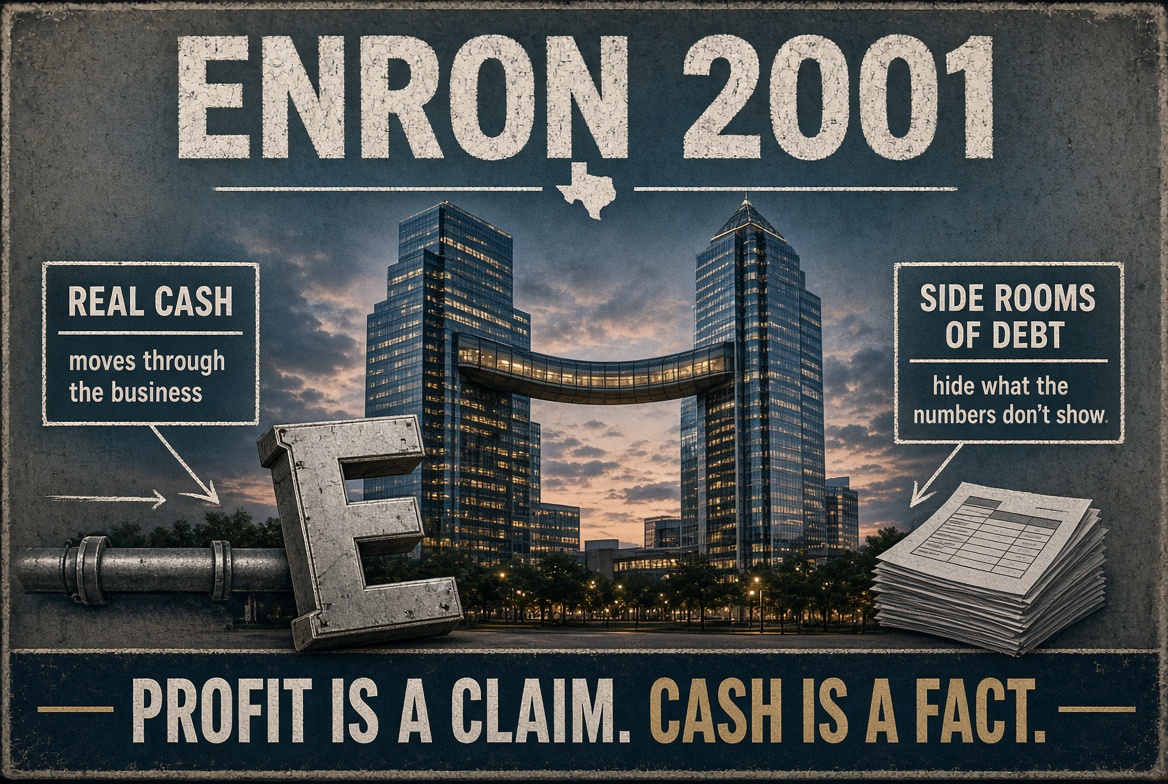
Workers at Enron, and later at other fallen firms, sometimes held most of their savings in company stock. When the stock collapsed, jobs and nest eggs vanished together. Diversification is not exciting — it is protection.
A respected figure ran a fake investment scheme for years. Victims included charities and retirees. If returns seem too smooth and too good, ask harder questions. Trust still needs verification.
Steady builders often looked boring: save, own good companies, wait. Spectacular failures often mixed pride, debt, concentration, or belief that “this time is different.” You cannot control markets. You can control habits, humility, and how much risk you take with money you cannot afford to lose.
Question 1 of 100 · Life · answered right in this bank: 0
Buying a stock with cash you already have means you own a piece of a business. The price can fall. Time can still help if the business earns money.
A sports bet is a product built so the house keeps an edge over many plays. You can win a night. The book is not built to lose the year.
A card is a loan. If you do not pay the statement, real-world interest is often around 20% a year.
If the stock drops, you still owe the bank the full charge. In this app you cannot buy shares from the card.
Legal does not mean a good deal. The vig is how the book gets paid on a “50/50” game. Parlays look big because extra legs favor the book.
You have $0 in chequing and put $200 of stock on a card. The stock drops 30%. What do you owe?
If a book takes a cut every bet, who is more likely ahead after 200 bets?
There are two games only. One is the market: prices move, you buy and sell shares, you may use auto-buy. The other is study: patterns, money lessons, and history cases. Study pays a share of your portfolio when you get the idea right, not when you guess.
Dollars and percent are both on the home screen. Dollars answer “how large did the pile get.” Percent answers “how fast did it grow from the first $330.” Do not mix them into one trophy.
Week 1. What a share is. Cash versus a company. Bid and ask. Why buying and selling the same day costs you the gap.
Week 2. How to read one line of a simple statement: cash, debt, profit, sales. Healthy or not, and why.
Week 3. Patterns on a chart as shapes, not magic. Name the shape. Do not treat a shape as a promise.
Week 4. A history case that ended badly (Enron or Pets.com). Article, snapshot, two-step question.
Week 5. A history case that built something real (Ford or Walmart). Same method. Notice the down years.
Week 6. Percent versus dollars. Why +80% on $40 is not the same as +12% on $8,000.
Week 7. Auto-buy as a schedule. Leave the phone. Check once.
Week 8. Bogle’s cheap wide basket versus picking one exciting name. Fees eat compounding.
Week 9. Credit cards and sports books are not investing. The house keeps a cut.
Week 10. Review medals. What work earned money. What was only a price jump.
If you start with $330 and you now have $396, you have a 20% return. If you start with $3,300 and you now have $3,960, you also have a 20% return. The second person has more dollars. The rate is the same.
If a $50 name doubles, that is +100% and +$50. If an $8,000 pile rises 6%, that is +$480. The medal for rate would praise the first event more. The medal for size would praise the second pile if it is also a new high. That is why both medals exist.
A drop of 50% needs a rise of 100% to get even. Write that on the board. It is the most important percent in the course.
Market history holds Enron, Pets.com, Lehman, Kodak, GameStop, and Wirecard next to Ford, Walmart, Disney, Apple after 1997, a cheap wide fund, Buffett’s method, and a dull pipe or bank. Teach them with the same tools. Do not make the builders into saints. Every one of them had years when the shares fell hard.
Lessons and resources · tap a story
Lead case
A detective file. Part 1 pays as you answer. Part 2 is the rest of the papers. Complete closes the story and pays out the module.
Sock-puppet ads. Everyone talks about selling pet food on the new internet.
The firm that sells the pipes of the internet. The price assumes the pipes will grow without a pause.
The world’s phone leader. Cash and share are huge. A new kind of phone appears.
Late fees and aisles of discs. A small mail-and-stream firm offers to sell itself cheap.
A famous bank. Housing prices had only gone up. Mortgage paper looks like a machine for yield.
Canadian network giant. The stock is a national pride trade.
The name on the yellow box. They even built an early digital camera.
A mall game shop. Online boards decide the squeezed short sellers will pay. The price rips.
German payments star. Listed in the DAX. Critics are called short-sellers and pests.
The store on the internet just watched its share price fall about 90% from the 1999 peak. Headlines say the toy is over.
The industrial giant that also ran a huge finance arm. For years it looked like a forever dividend machine.
A car that workers can also buy. The factory speeds up. The price of the car falls.
Small-town shops. Thin profit on each dollar. Many trips to the till.
A film studio buys land and builds a park. The character is not the whole firm.
Near empty cash. A returning founder. Then a phone that people already wanted, made simple.
A fund that owns a little of many companies and charges almost nothing. No hero needed each week.
Buy a good business. Pay a fair price. Hold it. Do not need a miracle every Tuesday.
Tolls on fuel in a pipe. Interest and fees at a bank. Dull cash if the rules hold.
Income is the tap. Investing is the bucket. A weak tap and a perfect portfolio still fill slowly. Skills, hours, and the job you can keep matter before ticker symbols.
A trade or the army at 18 can mean pay and no school debt, and a lower ceiling. University can mean later start, debt, and higher pay if the career is real. Neither is magic. List the pay, the debt, and the year you can first invest a surplus. That year is your investment age.
Do not pick a career from a movie. Pick from what the work pays after tax, how long the training lasts, and whether you can stand the days.
A new car costs more each month. A used car often costs less to buy and more in surprises. Neither is “always cheaper.” Add the payment, insurance, fuel, and a repair reserve. Then see what is left to invest.
A car is usually a tool that loses value. Buying the tool that keeps you employed can be rational. Buying the tool to look ahead of your pay is how the bucket stays empty.
Rent is a bill. You do not keep the walls. The landlord covers many repairs. You can usually invest more if the rent is modest.
A house is a place to live and an asset with a loan attached. You build equity if you pay the mortgage. You also pay tax, upkeep, and the surprise when the roof fails. Empty rooms earn nothing.
Own because you need the home and can hold the loan through a bad year. Do not own because a chart of house prices went up last year. A house you live in is not the same machine as a share of Prairie Pipe.
This is the one that can wipe a good decade. Two people under one roof share income, bills, habits, and risk. A partner who saves, tells the truth about money, and can delay a want is an ally. A partner who hides spending, treats credit like free cash, or needs the house to impress other people is a second leak you cannot chart away.
Divorce is not a ticker. It splits time, focus, and often the pile you spent years building. Starting again at 34 with half the book and the same bills is a harder reset than selling a bad stock at 16. The game can put you back at zero after a MoonSoda crash. Life does that when a household breaks and the habits were already bad.
You will not “pick a spouse” in this app. You can still learn the test while you are young: watch how someone treats money when no one is clapping. Do they keep a promise. Do they blow a windfall in a week. Do they speak about work and family as a long path, or as a jackpot. Character shows up in small bills long before a wedding.
Money is not the reason to love someone. Money habits are a reason to be careful. A household is a firm. Two stewards can raise kids and still invest. One steward and one hole in the bucket is how people start over when they can least afford it.
Which leak is usually the largest over a lifetime?
A house you live in is mainly:
How many shares?
sent

Sell shares first. That money lands in cash. This moves cash into the cash-out account. A parent approves it before real money leaves the house.
This is a request. Parent must accept before real money moves.
Learn from this trade
You used coins on a spec name.
Spec names can go to zero.
Quality names still move.
That is not the same as a casino.
Medals live here only. Size is market profit. Year return is the market only. Cash-in is dividends and lesson pay. Allowance does not count.
Every buy, sell, lesson, allowance, and coin sent to a parent.